
Book a Consultation with Lipo Sculpt
Discuss your concerns and treatment options through the official Lipo Sculpt consultation service.
A dedicated discussion

The official booking page describes a one-to-one telephone consultation with a specialist. It lists a £15 consultation fee and a duration of 10–20 minutes. The page says the fee is deducted from the treatment cost once the treatment is booked and completed.
You can discuss your concerns and a possible treatment plan. You do not have to decide on treatment during the call.
Arranging the conversation
The booking page invites you to suggest suitable callback times, including evenings or weekends, and several possible treatment dates. It also mentions home visits for some treatments. Confirm the arrangements directly with the team.
Opening the booking link takes you to the official website. This page does not reserve an appointment or take a payment.
Make a short question list
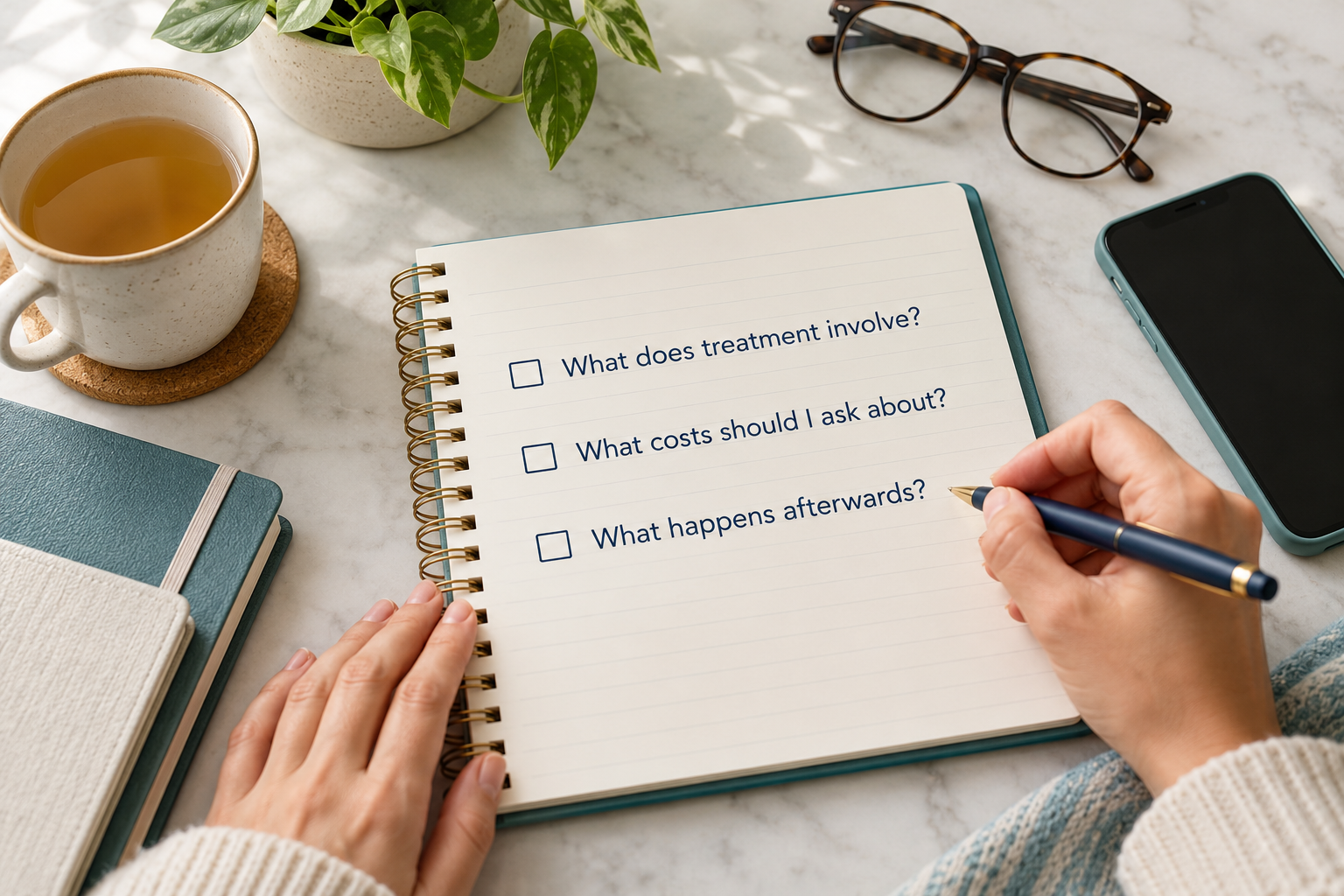
Before your call, write down what you would like explained. Keep the list focused on the decision you are considering, rather than trying to choose a treatment from its name alone.
- What concern would you like to discuss?
- Which treatment description prompted your enquiry?
- What would you like to understand about suitability?
- What questions do you have about risks and limitations?
- What do you need to know about costs, preparation and aftercare?
- What arrangements would you need to check before choosing a date?
Use the list to record the answers and any points that need a follow-up conversation.
Before proceeding
Read the terms information, including the link to the full official terms. Ask the team to clarify any appointment, deposit or cancellation detail that is unclear before paying.
For information about sharing your details, visit the privacy page. For a general enquiry, use the contact options.
Consultation questions
Where do I arrange the consultation?
Use the official booking link above, or call the supplied Lipo Sculpt telephone number.
Can I browse treatments first?
Yes. The services overview is available to read before you contact the team.
Does clicking the booking link confirm an appointment?
No. It opens the official consultation page so you can follow the booking instructions there.
A consultation request and a treatment booking
Treat the consultation as an opportunity to understand the proposal and decide what needs to happen next. Opening the official booking page is only navigation to another website. It does not, by itself, arrange a call, take a payment or reserve a treatment date. Follow the instructions on the official page and check the details before completing any step there.
Keep track of what has actually been agreed. If you have suggested a callback time, ask how that time will be confirmed. If you have discussed a possible treatment date, ask whether it is a suggestion or an agreed appointment. The distinction matters when making travel or work arrangements, and it avoids treating a request as a confirmed booking.
Preparing a focused description of your concern
Write a brief description of what you want to discuss in your own words. Include the question that brought you to the consultation and what you would like to understand by the end of it. If you have been looking at a particular treatment page, note its title so you can refer to the same information during the call.
Keep observations and expectations separate. One note might describe the concern; another might explain the change you hope to explore. This helps you ask whether the proposed option addresses the concern you actually mean. You do not need to turn the note into a diagnosis or choose a technical term before you can ask a question.
Working through a proposed treatment plan
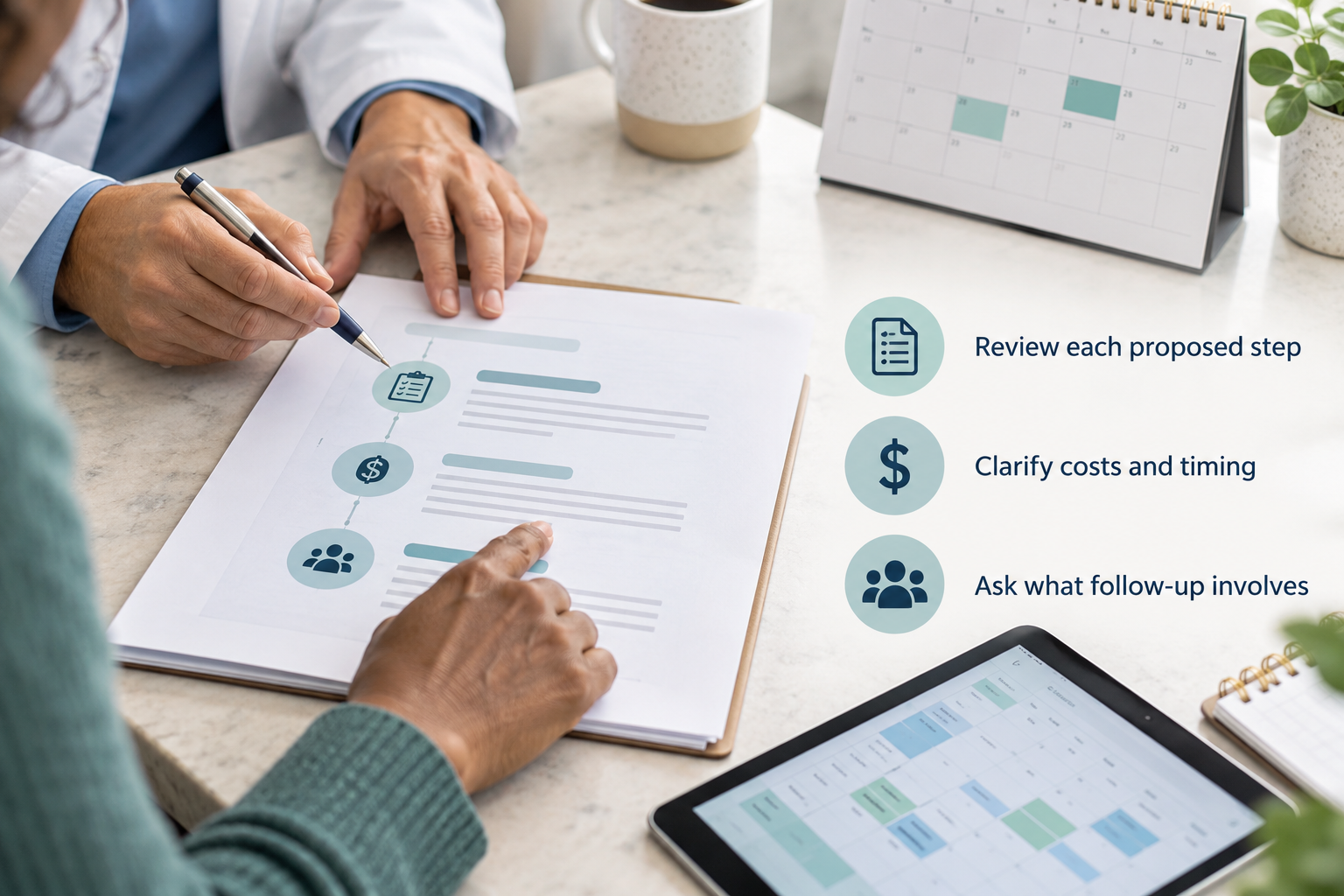
If a treatment is proposed, ask for its name and an explanation of why it is being considered. Ask what information is needed to assess suitability and which points remain to be checked. Record any next step as an action rather than assuming the discussion has settled everything. For example, you may need a further explanation, information about a location or clarification of a cost.
Useful questions include: What does the proposed treatment aim to address? What are its limitations? What risks or side effects should I understand? What preparation and aftercare would apply? How would progress be reviewed? These questions are a conversation aid; they do not describe a treatment protocol or replace advice about your individual circumstances.
Keeping costs and conditions together
Ask for the overall proposed cost and the items it covers. If the discussion mentions a consultation fee, treatment deposit or course of sessions, ask how those amounts relate to each other. Keep the answer alongside the relevant written terms so you can review the complete arrangement before paying.
The official consultation page describes how its consultation fee is credited towards treatment, while the terms page contains separate provisions about deposits and appointment changes. Do not assume that similarly named payments have identical conditions. Ask which provision applies to the payment you are considering and how any unresolved suitability question would affect the next step.
Planning the practical details
Have your diary available if you would like to discuss dates, but check the arrangement before setting aside travel or treatment time. Ask where the proposed appointment would take place and what arrival or preparation instructions would apply. If a home visit is being discussed, ask the team to confirm its availability for your treatment and area.
Mention any practical question that affects whether an arrangement is workable for you. This might be a question about access, the callback time or receiving information in a form you can review. Ask what can be arranged rather than assuming that a particular accommodation or appointment slot exists.
After the conversation
Review the notes you made and separate agreed details from unanswered questions. A useful record might include the treatment discussed, the quoted cost, the proposed location and the next action. If an answer was unclear, use a follow-up enquiry to address that specific point rather than trying to infer it from another page.
If you decide to continue, follow the official booking instructions and keep any information supplied through that process. If you need more time, return to the questions that affect your decision. The consultation page states that you do not have to book treatment during the call. This page cannot confirm a booking or tell you that a payment has been received.
Set an agenda for the call

Choose the two or three questions that would most affect your decision and put them at the top of your notes. Those questions may concern the purpose of a treatment, whether further assessment is needed or whether the practical arrangement is workable. Starting with priorities can help you use the conversation well without assuming that every detail will be settled immediately.
An agenda can be brief. For example: explain the concern, understand the proposed option, then clarify the next step. Keep supporting details below those points so that you can refer to them if needed. If the discussion introduces something you had not considered, write it down and ask how it relates to the original question.
At the end, return to the agenda and identify any unanswered item. Ask which point can be answered now and which requires further information. This gives a follow-up a clear purpose and prevents a general conversation from being mistaken for a complete treatment or booking decision.
Describe an observation without choosing a diagnosis
You can explain what you have noticed in ordinary language. Distinguish the observation from your interpretation of it and from the change you hope to discuss. For example, a note can say which area concerns you and which question you want answered, without deciding the cause or naming a treatment as the only possible response.
If the concern has changed, describe the change accurately and say when you noticed it as closely as you can. If you are unsure of the timing, label it as approximate. Do not fill gaps with information taken from another person's experience. The purpose of your note is to help you communicate your own question, rather than to prepare a clinical conclusion.
Ask the person conducting the consultation what further information is needed and how it should be provided. This website cannot assess a concern from your reading choices or determine which information will be relevant in an individual case.
Prepare for a body-contouring discussion
If body contouring is the subject of your enquiry, identify the area and the question you would like explored. Keep a distinction between the appearance you are describing and the outcome you hope to understand. Ask the consultant to explain what the proposed option is intended to address and what it does not establish about your individual situation.
A useful question might be: “Which part of my concern would this proposal address, and what would still need to be assessed?” You can then ask how the plan would be described, what practical information is needed and how the explanation of limitations relates to your expectations. Avoid turning an example image into a promised outcome in your notes.
If several options are mentioned, write down each name and the reason given for discussing it. This helps you compare actual proposals rather than merging them into one general idea of body treatment. Use the Services overview to revisit the category names after the call.
Prepare for a skin-tightening discussion
For a skin-tightening enquiry, identify the area you mean and the aspect of the service description you want explained. If you have read about HIFU, Morpheus8 or another named option, keep the relevant page available so that the conversation can refer to the same description. People specifically researching Morpheus8 services in the area may also review information about morpheus8 near me bristol before the consultation, particularly when preparing questions about treatment frequency, suitability and what may need to be assessed.
You might ask: “What information do you need before explaining whether this option is relevant to my concern?” Follow that with questions about the proposed process, limitations and practical arrangements. If the answer uses the same word in different ways, such as area or session, ask what it covers in this proposal.
Separate what is known from what remains conditional on assessment. A clear note can identify a possible next step without recording it as a confirmed treatment plan. If the explanation later changes, ask which part has changed and keep the revised information with the earlier discussion.
Prepare for a skin-blemish enquiry
If the consultation concerns a skin blemish, ask how the team wants the concern described and assessed. Use your own observation rather than selecting a diagnosis from a website list. If you are asked to provide an image or other information, check the intended route and any instructions before sending it. This page has no image-submission facility.
Keep questions about assessment distinct from questions about treatment arrangements. An example is: “What needs to be established before a treatment can be discussed?” Only after the next step is clear should you interpret a discussion of dates or costs in that context. A preliminary enquiry does not itself establish that a particular treatment will be offered.
If someone else is involved in the enquiry, ask how their participation should be arranged. Do not assume that the process for one person applies to another. The purpose of preparation is to make the concern and the question clear, not to supply a conclusion that only the appropriate assessment can address.
Prepare for a private wellbeing discussion
For an incontinence or intimate-wellbeing enquiry, consider how you would prefer to start the conversation. You can begin with a question about the consultation process and ask how personal details should be discussed. Choose a setting for the call that allows you to speak as privately as you wish, and keep any notes where you can refer to them comfortably.
If you are researching available options before the consultation, information about pelvic floor treatment for incontinence manchester may provide useful background for questions about intimate wellbeing and the treatments you want the specialist to explain. Use this information to prepare questions rather than assuming that a particular treatment will be suitable for your circumstances.You may want to ask who will discuss the concern, what information is needed and what the next assessment step would involve. If a term feels unfamiliar or does not describe your concern accurately, say so. A clearer description in your own words can help prevent the conversation from proceeding on an assumption you do not share.
Do not treat a general service description as a diagnosis or a promise of an individual result. Ask how the explanation applies to the specific concern you have described. This page cannot assess symptoms or decide that a particular treatment is the appropriate next step for you.
Ask about the person and the setting
If knowing who would provide the treatment is part of your decision, ask which person or role is involved in the proposed arrangement. Ask about the qualifications and training relevant to that treatment, and request clarification of any title you do not understand. This website does not supply an individual practitioner directory from which those details can be inferred.
For the setting, ask where the proposed appointment would take place and what practical information you need before attending. If access or another accommodation matters to you, explain the specific requirement. Asking whether a particular entrance can be reached is more precise than assuming that a general description of a location answers every access question.
Keep any answer tied to the person and location actually discussed. If either changes, ask whether the information needs to be checked again. These questions help you understand the arrangement; they do not assert that a particular qualification, facility or accommodation is available.
Compare proposals on a like-for-like basis
If the conversation includes more than one possible plan, create a separate note for each. Use the same headings for both: intended purpose, assessment still needed, proposed sessions, practical arrangements, cost and unanswered questions. You can leave a heading blank where the information has not yet been provided. A blank is more accurate than a guess.
Ask which differences are relevant to your concern. A lower stated amount, for example, cannot be understood properly if you do not know what each amount includes. Similarly, a proposed date does not describe the whole arrangement if the location or assessment step remains open.
Avoid ranking proposals only by how quickly they appear to lead to an appointment. Review the information that matters to the decision you are actually making. If you cannot explain the difference between the proposals in ordinary language, ask for that comparison to be made clear before treating either as your chosen next step.
Ask how progress would be discussed
If a plan is proposed, ask what the team means by reviewing progress and how that discussion would be arranged. You may want to understand what information would be considered, who would discuss it with you and how questions arising later should be raised. This page does not promise a particular review schedule or follow-up service.
A useful distinction is between your observation and an assessment of that observation. Ask how you should communicate something you notice and which contact route would apply. Do not infer a follow-up procedure from a general statement about customer care. The arrangement needs to be explained in relation to the proposal under discussion.
If a timeframe is mentioned, note what it refers to. It could concern an appointment, a suggested review or an explanation of how a treatment is discussed. Ask for clarification if the meaning is unclear. Recording the context helps you avoid turning a general timeframe into a guarantee about an individual outcome.
Organise preparation and aftercare questions
Create two separate headings in your notes: before the appointment and after the appointment. Under each, write the questions you want the team to answer for the proposed treatment. This makes it easier to distinguish instructions about preparation from information about what follows. It does not mean that the same instructions apply to every service.
Ask when the relevant information would be provided, how you can raise a question about it and what to do if an instruction is unclear. If practical circumstances make an instruction difficult to follow, explain that to the team rather than adapting it yourself. This website does not provide personalised preparation or aftercare instructions.
When you receive written information, keep it with the treatment proposal it concerns. If the proposal changes, ask whether the instructions also need to change. A set of notes is useful only when you can identify the treatment and arrangement to which it applies.
Separate a preferred date from an agreed date
When discussing availability, label each date according to its status. A date you suggest is a preference. A date mentioned as a possibility remains a possibility until the responding service confirms what has been arranged. Check whether a confirmation concerns the consultation, an assessment or the treatment itself, because those can be different discussions.
If travel or time away from work is involved, identify the details you need before finalising those arrangements. Ask about the location, arrival instructions and any unresolved step that affects the proposed date. Do not assume that paying an amount or sending a message establishes every part of the appointment.
If you need to alter something, refer to the existing arrangement and ask how the change should be handled. Use the official terms to identify the relevant conditions, including the notice-period discrepancy already highlighted on the terms information page. This guide does not choose a deadline or reserve a slot for you.
Keep a clear record of a payment discussion
Before following an official payment instruction, identify what the payment is for and how it relates to the proposal. Keep the description of the payment with the amount discussed. If the terms consultation fee and deposit both appear, ask how they are being used in that particular explanation rather than assuming they mean the same thing.
After an external payment step, read any confirmation supplied by that service and keep it for your records. A payment acknowledgement and an appointment confirmation may contain different information. If you cannot tell what has been confirmed, contact the team with a focused question about the missing detail. This local page cannot see a transaction or verify its status.
Do not send payment details through a public social comment or an unrelated contact route. Follow the instructions at the official destination and ask for clarification if the destination or requested action differs from what you understood during the consultation.
Take stock before choosing a next step
After the conversation, review your notes without trying to force every open question into an immediate decision. Identify the information that is clear, the details still awaiting confirmation and any point that would change whether the proposed arrangement works for you. You can use that review to formulate a short follow-up.
An example is: “I understand the treatment being discussed, but I still need to know whether the quoted amount covers the proposed course.” Another is: “I have suggested dates, but I do not yet have confirmation of the location.” Each question addresses a specific gap rather than asking the team to repeat the entire conversation.
If you decide not to continue at this stage, distinguish that decision from any separate action needed concerning an appointment or payment already arranged. Read the relevant terms and contact the team about those arrangements. This guide cannot cancel a booking or determine the effect of a decision on an existing agreement.
Use a concise consultation record
You can organise a personal record under six headings: the concern discussed, the option proposed, information still needed, practical details, costs and next action. Write brief notes under each heading rather than attempting to capture every sentence. Include the date of the conversation so that a later update can be understood in sequence.
For the next action, identify what was actually agreed and who is expected to take it. A request for further information is different from a confirmed appointment. If a point remains uncertain, label it uncertain. That preserves the usefulness of the record when you return to it after a few days.
Keep the record for your own review and use the relevant part when following up. There is no need to paste the whole record into a public channel. The contact page gives the supplied telephone and official enquiry route when you need clarification or want to continue the discussion.
Where to return for each kind of question
For the treatment categories, return to Services and identify the section that relates to the proposal. For the customer-care approach, use About. For an enquiry about arranging the conversation, use Contact Us or the official consultation destination linked above. Keeping those purposes separate can help you find the right information without moving through unrelated pages.
For payment and appointment conditions, read the full official terms and bring any unclear provision to the team. For a question about information you have supplied, consult the privacy information and identify the interaction concerned. The answer to a treatment question does not automatically answer a privacy or booking-condition question.
Your next step should be based on the information you have actually received and the arrangement you understand. Reading this guide, opening an external link or reviewing the treatment menu does not itself confirm an appointment, establish suitability or record your agreement to a treatment plan.
Further information: official Lipo Sculpt book consultation.